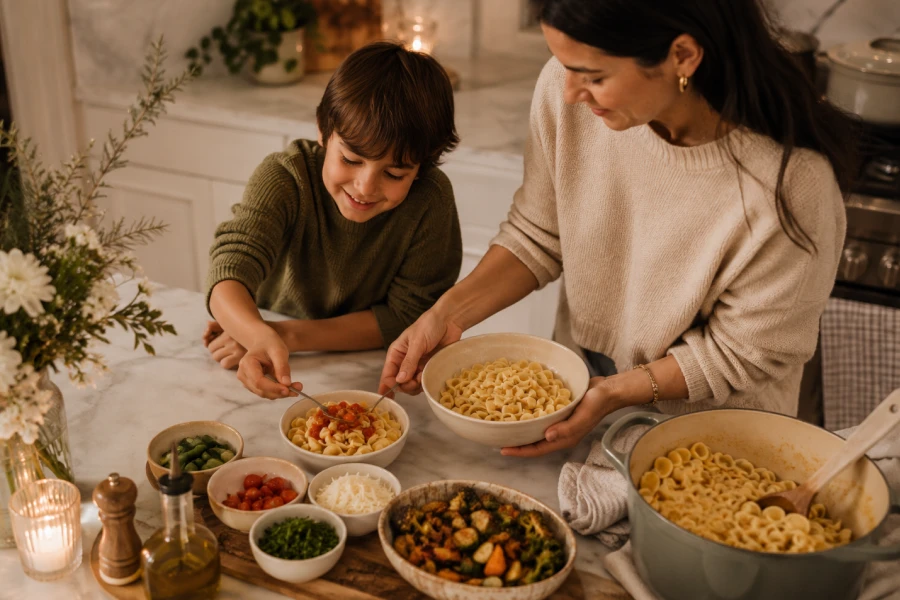
Dinnertime becomes difficult when every plate feels like a negotiation waiting to happen. Cozy dinner ideas for picky eaters can lower that pressure by making the meal feel familiar and flexible. The goal is not to create a perfect menu or force a new food to be loved. It is to offer a warm base that everyone can approach without worry. A simple format, such as a bowl, tray, or pasta night, gives the table structure. Choice within that format gives each person a little control. Children can keep a favorite food close while exploring one small change nearby. Adults can cook one meal instead of several competing dinners. That balance makes the evening feel calmer before anyone takes a bite. Comfort, not culinary perfection, is the real foundation of a sustainable family meal.
Start with an ingredient that feels dependable to the most cautious eater at the table. That might be rice, pasta, toast, potatoes, or a familiar soup. The base does not need to be plain forever. It simply gives the meal a safe place to begin. From there, add sauces, toppings, or sides in small separate portions. Use picky eater dinner support when you need easy formats that keep the first step clear. A recognizable base can make the rest of the meal feel less intimidating. It also lets adults serve more variety without demanding that every component be accepted immediately. The table becomes a place for choices instead of a test of bravery. That shift can change the mood of an entire weeknight.
One dinner can serve different preferences without becoming a restaurant kitchen. Arrange components so each person can build a plate that feels manageable. Tacos, pasta bowls, baked potatoes, and grain bowls all work well for this approach. Keep a few familiar toppings available alongside one or two new options. Children can select what feels comfortable while still seeing the wider meal. This exposure is gentle because it does not require an immediate decision. Adults also benefit because the meal remains coherent and easy to clean up. Instead of cooking separate entrées, you create one flexible framework. That framework is more likely to survive busy evenings and changing appetites. It makes nourishment feel practical rather than adversarial.
Texture often matters as much as flavor for selective eaters. Notice whether your child prefers crisp, smooth, chewy, or separated foods. That observation can guide how you prepare new ingredients. Vegetables may feel more approachable roasted until crisp or served with a familiar dip. Proteins may be easier to try in small pieces beside a reliable starch. Explore family-friendly recipe ideas for meals that respect texture preferences without limiting the whole table. You do not need to hide every unfamiliar ingredient. Presenting it in a manageable form is often enough. Over time, children learn that new food can appear without disrupting everything else. That predictability supports a calmer willingness to explore.
New food is easier to approach when it is not the center of attention. Serve one small unfamiliar element alongside something the child already enjoys. A new sauce can stay in a tiny bowl instead of covering the whole meal. A roasted vegetable can arrive as a side rather than replacing a favorite component. Let curiosity do more work than persuasion. Children may smell, touch, or ignore the item before ever tasting it. Each response is information, not failure. The goal is regular, calm exposure rather than a dramatic breakthrough. This approach helps adults avoid turning dinner into a battle of wills. It also gives children time to build trust with the table.
A flexible format can protect family time by reducing last-minute substitutions. Choose meals that allow one pot, tray, or base to serve everyone. You can prepare simple additions on the side rather than creating a different dinner for each person. Try warm one-pan dinners when you want fewer dishes and more room for customization. For example, a roasted tray can include familiar potatoes beside vegetables and protein. Each person can take the portions that feel right for them. This keeps preparation realistic while honoring individual comfort levels. It also makes it easier for children to observe foods without pressure. The family shares a meal even when plates are not identical. That shared rhythm matters more than identical bites.
A calmer dinner routine is built from repeated small successes. It grows when families choose formats that are forgiving, warm, and easy to adjust. Use ingredient-based dinner ideas when the fridge is imperfect and energy is low. You can start with what is available and shape it into something familiar. Keep expectations realistic, especially on tired weekdays. One peaceful meal does not need to transform every eating habit. It simply gives everyone a more comfortable way to gather today. That comfort can make experimentation more likely tomorrow. Over time, the table becomes associated with connection rather than conflict. That is a deeply nourishing outcome for any family.



Leave a comment