
Monday night rarely needs another ambitious project disguised as dinner. Easy weeknight dinner recipes with AI can help turn a tired collection of ingredients into a sensible meal. The most useful suggestions begin with the food you already own and the time you actually have. They do not insist on a complicated shopping list or a perfect kitchen. Instead, they reduce the first barrier: deciding what to make. Once that decision is smaller, cooking becomes easier to begin. A skillet, a pot of pasta, or a sheet pan may be all the structure you need. The tool can offer variations, substitutions, and quick ways to use leftovers. You choose what fits your taste and your energy level. This makes weeknight cooking feel more like problem-solving and less like another demand.
Open the refrigerator before opening a new recipe tab. Notice what needs to be used soon, then name it clearly. A few vegetables, a protein, and a pantry staple can become a surprising number of meals. Ask for suggestions based on those ingredients and a realistic cooking window. The response may point toward a soup, a pasta, a rice bowl, or a quick roast. Explore weeknight pantry meals when you want ideas that start with your kitchen rather than a grocery store. This habit reduces the impulse to buy more food every time dinner feels unclear. It also makes leftovers feel like useful ingredients rather than evidence of a failed plan. Working with what you have encourages a more relaxed kind of creativity. That is exactly what a busy night needs.
Too many recipes can be as unhelpful as no recipes at all. Give the tool a few limits so it can return fewer, more usable choices. Include the number of people eating, available time, dietary preferences, and any must-use ingredients. You can also ask for a one-pan option or a meal with minimal chopping. These details help the suggestions match a real evening instead of an ideal one. Choose one idea quickly rather than comparing every alternative. The goal is movement, not exhaustive research. Once the pan is heating, the evening often feels more manageable. That momentum matters more than finding the mathematically perfect recipe. A good prompt helps you act before hunger makes decisions harder.
AI suggestions should support your instincts, not replace them. Use a recipe idea as a flexible framework and adjust it to what your family enjoys. Swap a vegetable, skip a garnish, or use a favorite sauce when that makes sense. The best meal is the one that gets cooked and eaten with minimal stress. Try smart dinner shortcuts for adaptable strategies that keep preparation realistic. This mindset takes pressure off exact measurements and perfect presentation. It also makes the tool more helpful over time because you learn which formats work for you. You may discover that your family likes a certain base meal in several variations. Those patterns are more useful than any single recipe card. They become a personal library for future tired evenings.
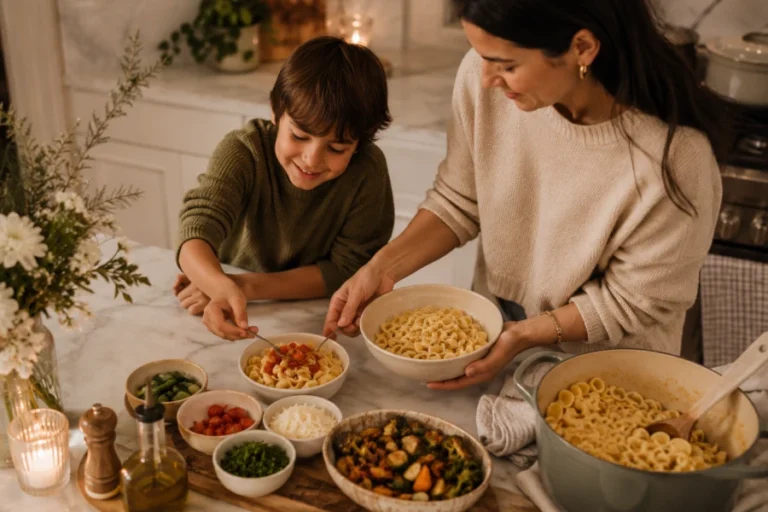
A reliable formula saves more time than a collection of complicated recipes. Choose a few formats that can absorb whatever you have on hand. Pasta with vegetables, a grain bowl, a soup, and a sheet-pan meal are flexible examples. Each format needs only a base, a main element, and one flavor direction. Once you know the formula, the exact ingredients can change every week. This reduces repetition without requiring a completely new plan each night. It also makes shopping easier because you know what components to keep nearby. Families can personalize the final bowls or toppings without creating separate dinners. The result is a meal system that is more resilient than a strict menu. That resilience is useful when the week starts moving too fast.
Leftovers become more appealing when they are treated as a beginning rather than a repeat. Ask for ideas that transform yesterday’s protein, vegetables, or grains into a new format. Roasted vegetables might become a sauce, a wrap filling, or a warm grain bowl. Cooked chicken can move into soup, quesadillas, or a quick salad. Use leftover-friendly recipes when you want a fresh direction without starting from zero. This approach reduces waste while keeping the family menu from feeling predictable. It also lightens the workload on nights when cooking from scratch is unrealistic. You are not taking a shortcut in a negative sense. You are using earlier effort more wisely. That is an efficient form of home cooking.
Weeknight dinner becomes easier when you build a rhythm instead of chasing novelty. Keep a few dependable ingredients, a few flexible formats, and a simple way to generate options. Use calm meal routines when you want a plan that supports the household without making it rigid. On energetic nights, you can cook something new and enjoy the process. On exhausted nights, you can choose the shortest route to a warm meal. Both choices belong in a healthy routine. The value of AI support lies in how quickly it helps you switch between them. It gives you ideas without demanding a performance. That leaves more room for the evening to feel like home. And on a Monday, that is often more than enough.



Leave a comment