
Dinner planning affects more than the food that appears on the table. Family dinner planning with AI can shape the pace, mood, and workload of the entire evening. When one person carries every decision, even a simple meal can feel heavy. A clearer system makes space for other people to participate before hunger takes over. Children can choose between two sides, adults can check schedules, and everyone can see the plan. AI support can make those small decisions easier to organize. It can suggest meals around preferences, time limits, and ingredients already available. The family remains in charge of the final choice. The tool simply helps turn a loose collection of needs into an achievable dinner. That kind of structure can make the evening feel calmer long before the first plate is served.
A dinner plan becomes more useful when it includes the people who will eat it. Ask family members for one easy preference before the week begins. You do not need a long survey or a different menu for every person. Two or three small inputs are enough to make the plan feel shared. An AI tool can turn those inputs into a few practical meal options. Use shared dinner planning when you want a simple way to bring more voices into the process. Children may feel more willing to try dinner when they helped choose one part of it. Adults may feel less burdened when preferences are visible instead of assumed. This creates cooperation before the kitchen gets busy. That cooperation can be more valuable than a perfectly balanced menu.
A weekly pattern gives dinner planning structure without pretending life will stay fixed. You might reserve one night for pasta, one for a tray meal, and one for leftovers. The ingredients and flavors can change while the basic decision remains easy. This kind of rhythm reduces the pressure to invent a brand-new idea every day. It also makes grocery shopping more predictable and efficient. Leave at least one open night for a changed schedule or an unexpected craving. That breathing room prevents a plan from becoming a source of guilt. Patterns should save energy, not create more rules to follow. Over time, the family learns which formats work best on specific days. That knowledge is the foundation of a calmer home routine.
Small details can derail dinner faster than the main recipe itself. You may need to know what can be prepped early, what uses the last vegetables, or what cooks fastest. An AI tool can organize those practical questions into a short, usable plan. It can suggest ingredient swaps when a store run does not happen. It can also help convert a few leftover items into a meal that makes sense. Explore ingredient-based dinner ideas when you want help connecting the pieces already in your kitchen. This reduces the mental clutter that builds around routine cooking. You spend less time holding details in your head and more time responding to the moment. That is especially helpful during busy family seasons. Practical support can be quiet and still make a major difference.
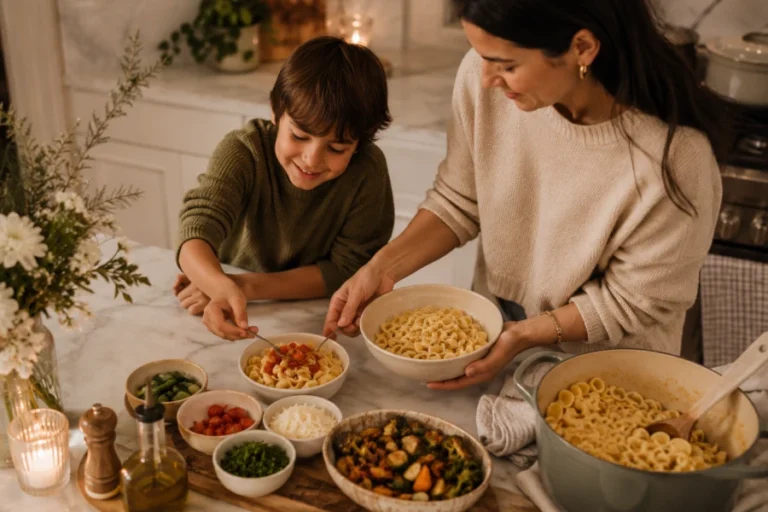
Children can contribute to dinner planning in small, age-appropriate ways. Let them choose a topping, wash vegetables, stir a sauce, or set the table. Older children can help compare two meal options or name a favorite weekly format. These contributions make dinner feel like a shared routine instead of one person’s task. Adults can also divide preparation by timing rather than by fixed roles. One person may start the oven while another handles the table or a quick side dish. The goal is not perfect teamwork every night. It is to make participation easy enough that it happens more often. When everyone has a small role, the evening feels less rushed. Connection often begins in the preparation, not only at the table.
A workable plan gives families a buffer against the chaos of late afternoons. It can prevent the panic that appears when nobody knows what dinner will be. Use quick family meal inspiration when a planned meal no longer fits the night you are having. A quick alternate idea can keep everyone moving without turning the change into a crisis. This matters because mood travels from the kitchen to the table. When the cook feels overwhelmed, the meal can become tense before it begins. When the next step is clear, there is more patience for conversation and cleanup. That emotional shift is an important benefit of planning support. Dinner does not need to be perfect to feel peaceful. It needs to leave enough room for the family to be together.
Every household needs a dinner routine that respects its actual schedule and energy. The most helpful approach is flexible enough to survive busy weeks and ordinary mistakes. Use leftover-friendly recipes to keep the plan useful when food remains from earlier meals. Keep a short list of reliable formats and refresh them with new ingredients or sauces. Let AI offer the first draft, then shape it with your family’s preferences. That balance keeps the system practical and personal. Over time, meals become easier to anticipate because the choices feel familiar. Families gain more than a menu; they gain a repeatable way to lower evening stress. The table can become a place to reconnect instead of another task to complete. That is the calmest outcome any dinner plan can offer.


Leave a comment